
Premier League Shirt Ban: Bristol Study Shows Where Gambling Ads Remain
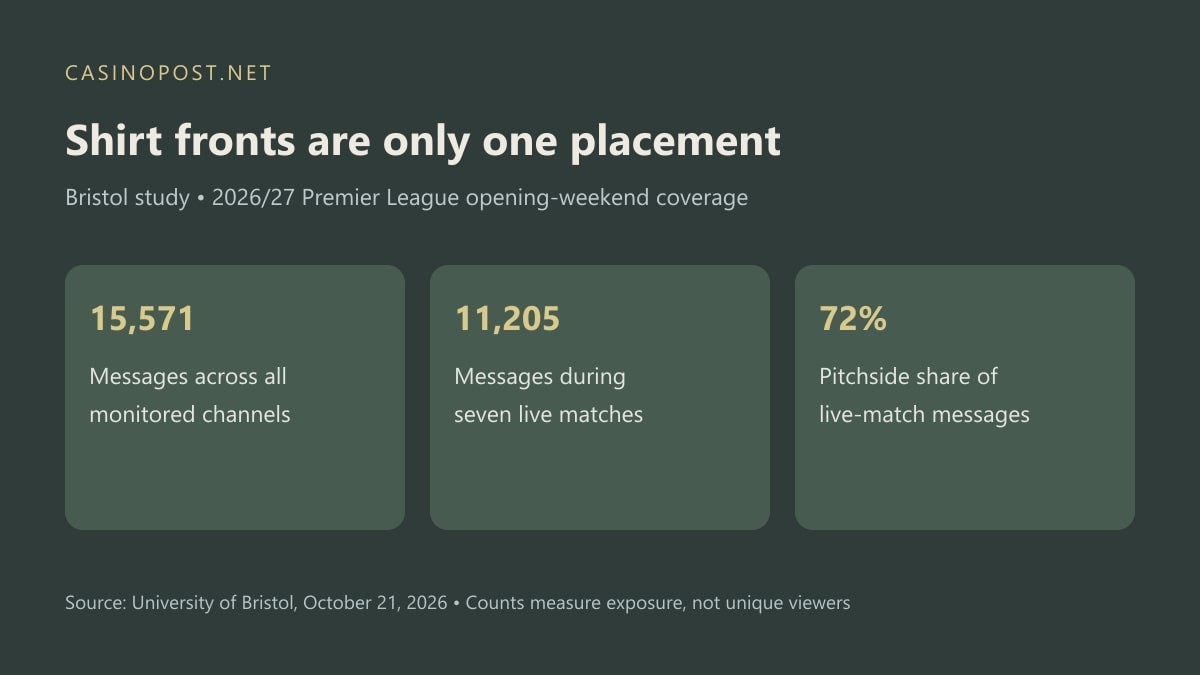
Removing gambling logos from the front of football shirts did not remove most gambling messages from Premier League broadcasts. A University of Bristol study published on October 21 counted 15,571 messages across the opening weekend's monitored coverage, with pitchside advertising dominating the live-match total.
The university's account of the research says the shirt-front restriction largely removed logos from that specific position. Researchers estimate that the measure contributed to a 10.5% reduction in messages during live matches. That estimate is narrower than a claim that football's overall gambling exposure fell by the same amount.
Keep the two message totals apart
The researchers examined the Premier League opening weekend of August 21–24, alongside 15 hours each of Sky Sports News and TalkSport, plus social-media activity from ten major gambling brands. The results were released in October; the matches being measured took place in August.
Across seven live matches, the team recorded 11,205 messages. The broader total of 15,571 covers the additional monitored channels too. Comparing one number directly with the other would confuse a subset with the entire sample.
Neither count tells us how many different people saw an advert or how many bets followed. The study concerns marketing exposure. An individual message can be visible to many viewers, while the same branding can appear repeatedly during a broadcast.
The placements left on screen matter
Pitchside advertising supplied 72% of live-match messages. Branding on sleeves and training kits increased by 362% compared with previous years, according to Bristol. The researchers describe a restriction that worked on shirt fronts while leaving other prominent routes to the audience.
Time is another measure. At least one gambling message was visible for five hours and 16 minutes across the live broadcasts, close to one fifth of their combined duration. Message count and time on screen answer different questions: repeated brief appearances and a long visible logo need not produce the same totals.
The Newcastle United–Liverpool broadcast had the greatest measured exposure, with 2,702 messages and gambling marketing visible for almost 41% of its duration. That is a result for one match, not the average for all football.
What the comparison can support
The overall message count was lower than the 2024 findings but remained 41.57% above the 10,999 recorded in 2023. A decline from one comparison year can therefore coexist with an increase from another. The study does not justify dropping the baseline from that claim.
For operators and rights holders, placement-specific restrictions require placement-specific measurement. Our report on the Ksa's Google whitelist discussions concerns a different advertising channel and the visibility of illegal operators. Bristol's football research instead asks how much branding remains after a particular sponsorship restriction. Those are related marketing questions, with different scopes and measures of success.